
The Interview: Shayne De la Force, Managing Partner & CEO LFI
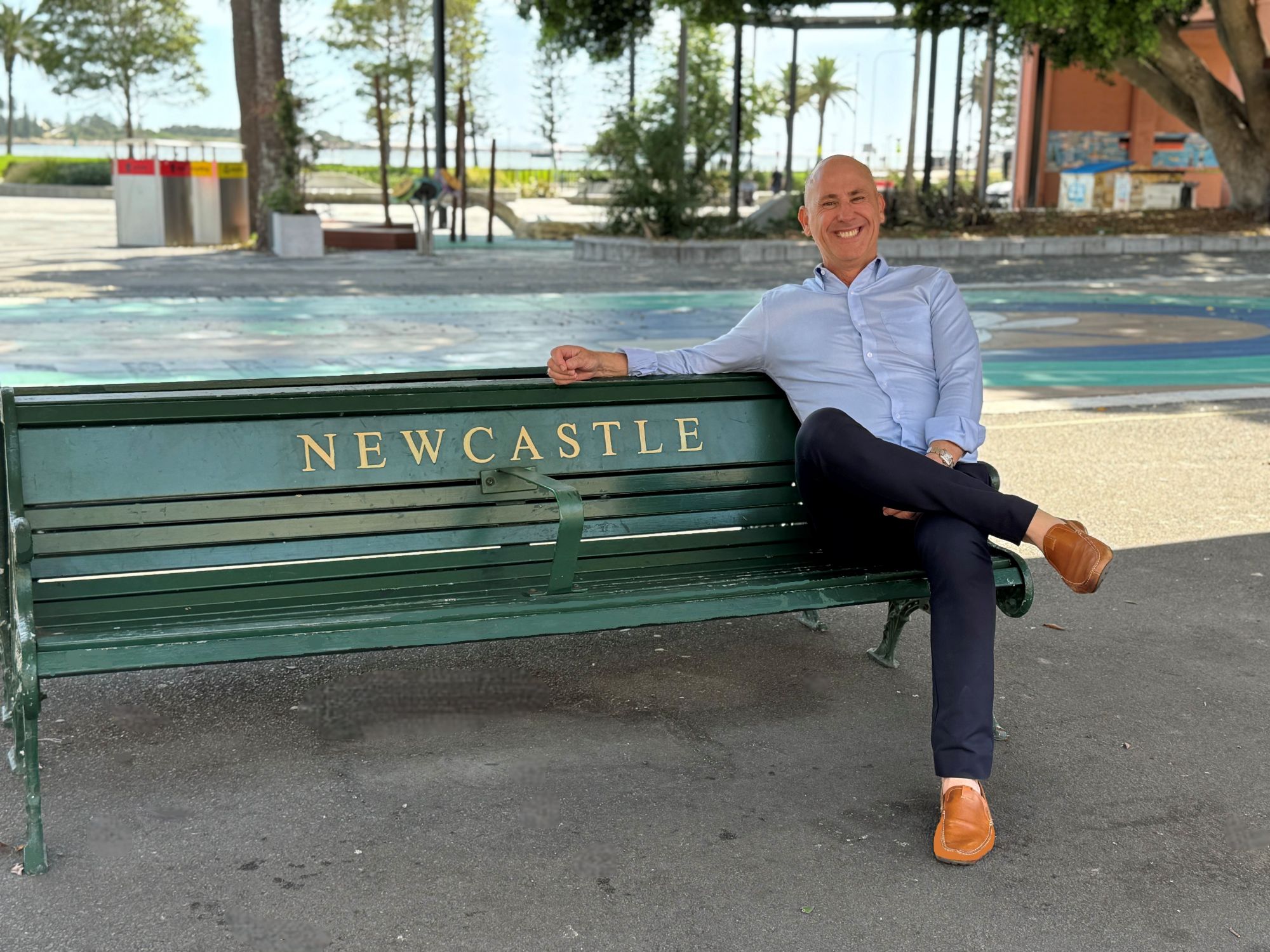 Tell readers what LFI does?
LFI Asia Pacific Pty Ltd is a quantum technology leadership firm.
We work with industrial manufacturers to help them understand and navigate the economic consequences of quantum technology before those consequences become problems they can’t easily solve.
We’re not a quantum technology company. We don’t sell hardware or software. What we provide is embedded leadership, working inside organisations as a virtual ‘Chief Quantum Officer’ function to give them the strategic clarity and structured preparation they need without the cost of a full-time quantum executive.
Our clients are industrials in sectors like mining and resources, defence supply chain, advanced manufacturing, and energy which are the kinds of businesses that are already being affected by quantum-driven changes in their markets, even if they don’t yet recognise it as a quantum issue.
Why have you chosen Newcastle, Australia as your Asia-Pacific base?
It came down to what the region actually produces. Newcastle and the Hunter Valley anchor some of Australia’s most significant industrial sectors being coal and resources, defence manufacturing connected to the Hunter class frigate programme, advanced manufacturing, and energy.
These are exactly the sectors where the economic pressure from quantum technology is becoming measurable first. When defence and aerospace primes begin flowing quantum readiness requirements down their supply chains, Tier 2 and Tier 3 manufacturers in those sectors will need to respond quickly.
We wanted to be embedded in the industrial geography where that pressure will land, not in a capital city at arm’s length from it. Newcastle also has the infrastructure of a serious city with the industrial density of a region that still makes things. That combination is rare, and it’s exactly where we need to be.
Where do you see areas of growth for the company?
The clearest near-term growth is in quantum security, specifically helping companies protect operational intellectual property (IP) from what the cybersecurity community calls “harvest now, decrypt later” attacks.
Nation-state actors are harvesting encrypted industrial data today with the intention of decrypting it once quantum computers capable of breaking current encryption become available (which is currently looking like 2029). That’s not a future risk. The harvesting is happening now.
Manufacturers with proprietary extraction methods, formulations, process data, or defence-related IP are already exposed and most don’t know it. Beyond security, as quantum computing capability becomes commercially accessible over the next three to five years, we’ll see significant growth in helping clients move from readiness and security into what we call Quantum Utility. I.e. the stage where they begin extracting genuine operational and economic advantage from quantum technologies (quantum computing, quantum sensing & quantum communications).
New Zealand’s manufacturing sector is also on our radar. The supply chain interconnections between Australian and New Zealand industrial manufacturers mean the exposure is shared, and the preparation should be too.
Describe quantum readiness.
“Quantum readiness” is the organisational and operational state where a company has assessed their quantum-related risks and opportunities, understands where they sit relative to the timeline of quantum technology development, and has a structured plan to respond.
It’s important to be clear that readiness doesn’t mean deploying quantum computers. Most manufacturers won’t do that, at least not directly. What it means is that they’ve addressed their data security posture against quantum threats, they understand which of their supply chain relationships will begin carrying quantum requirements, and they have the internal leadership and knowledge to make informed decisions as the technology matures. At LFI we structure this through four progressive stages: Quantum Readiness, Quantum Security, Quantum Utility, and Quantum Advantage.
Most of the companies we work with start at the first stage and discover that the security question is far more urgent than they expected.
Readiness is fundamentally about making the right decisions at the right time, neither ignoring quantum until it’s too late nor investing prematurely in technology that isn’t yet commercially viable.
To choose this region as your Asia-Pacific base, will you have feet on the ground?
Yes, and that’s deliberate. The virtual Chief Quantum Officer model we operate is not a remote advisory service. We’re embedded with clients, present in the markets we serve, and engaged in the local industrial and government ecosystems.
I am personally in Australia now and will be here establishing those relationships and expanding the team. LFI Asia Pacific Pty Ltd. is a registered Australian entity, not a foreign company operating at a distance. As the practice grows, we will build the local team to match.
Our expansion into Europe and Japan is planned along the same lines with a local presence, local registration, embedded engagement with the industrial sectors in each region.
How many other countries are you in?
We are currently operational in the United States, where LFI is headquartered in Dallas, Texas, and this covers the entire Americas region.
Now in Australia through LFI Asia Pacific Pty Ltd. in Newcastle, New South Wales, will cover the entire Asia Pacific region from Japan down to New Zealand.
Then, Germany and Japan are the next planned international offices, reflecting the significance of those countries as advanced manufacturing economies where quantum readiness is already becoming a board-level conversation.
Our network extends further than our entity footprint, through trade show engagements and government advisory participation, we work with industrial contacts across the United States, Australia, Germany, Japan, and the Middle East, but formal operations are the US and Australia today, with Europe and Japan to follow.


