
Engineers explore pneumatic air spring actuation for 30-40 per cent boost to outputs of industrial energy and rural solar farms

Urban business including commercial, manufacturing and processing plants have been quick to recognise the cost efficiencies of solar power
Australia is on track for 82% renewable energy by 2030, according to the Federal Department of Climate Change, Energy, Environment and Water. This doubling of green energy’s share of the energy mix within the current decade is driven by record solar and wind investments and battery advances.
Urban businesses – including manufacturers, food and beverage and primary processors, commercial buildings, transport and warehouse logistics – have been quick to realise the potential of capturing clean, low-cost energy on their rooftops. They are joining miners, energy producers, water, wastewater utilities and farmers in harnessing power from the sun to bring down the cost of energy as a major production input.
To maximise the amount of solar energy captured by banks of panels, businesses, engineers, and solar farm operators are seeking the best way to actuate their panels to track the sun, thus increasing energy output by 30-40% compared to fixed systems.
High-efficiency and typically less expensive alternatives to more complex actuation methods – such as geared motors and hydraulics – include pneumatic actuators, which can offer a robustly durable, low-maintenance, and cost-effective option, according to current research by the international Science Direct industrial research platform.
A current harsh climate case study by ScienceDirect finds pneumatic actuators ideal for rugged environments, using compressed air to maintain optimal sun-tracking angles.
Key Features and Advantages:
- High force-to-weight ratios and high reliability with fewer failure points.
- Less expensive and much simpler design
- Cost-Efficient Operation:Lower manufacturing costs compared to conventional systems and ongoing energy savings due to low-duty cycle operation.
- High Reliability:Pneumatic systems, including rubber and fabric air springs types, can provide millions of cycles with minimal maintenance.
- Dual-Axis Capability:Used in dual-axis trackers for both altitude and azimuth positioning, allowing trackers to follow the sun precisely.
- Environmental Resistance:Designed to withstand high heat, cold, and humidity, often utilising materials that resist corrosion.
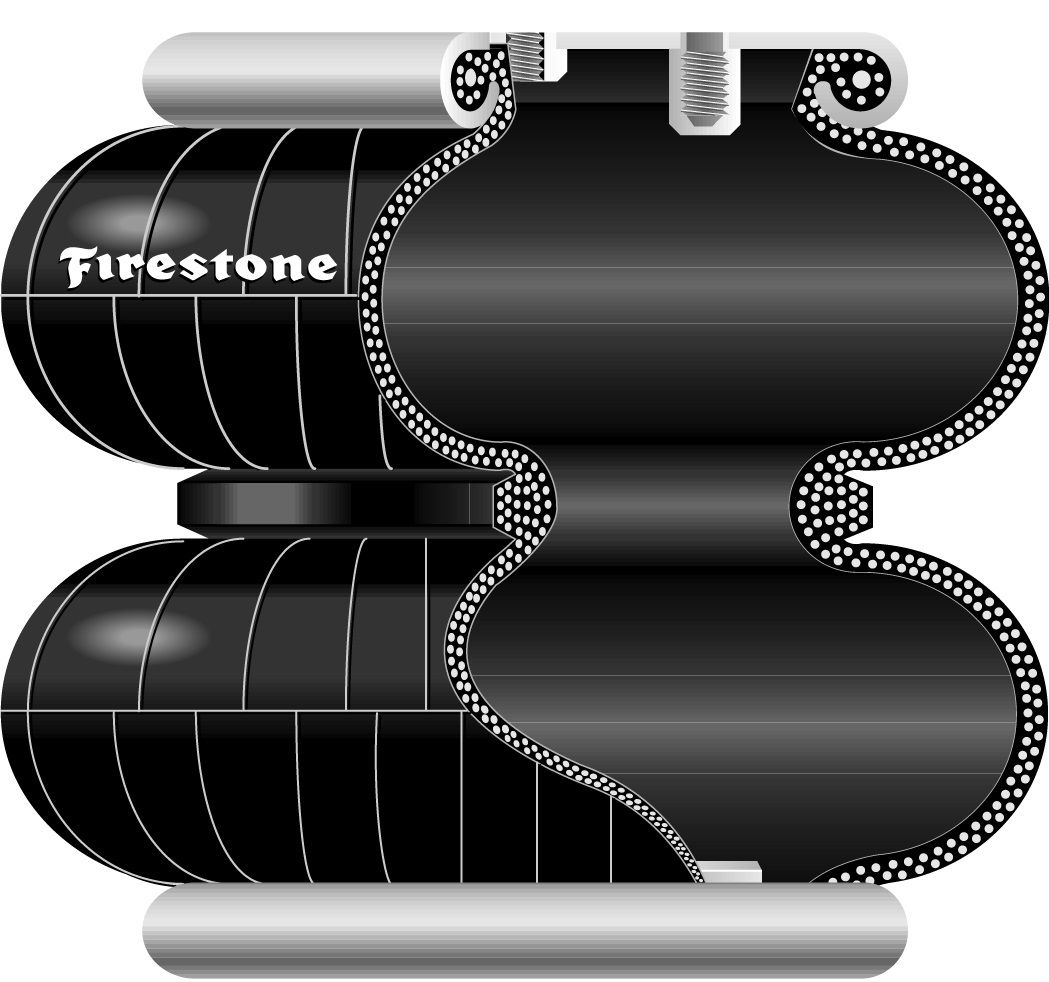
Rubber-and-fabric air springs for pneumatic solar tracking are simple, tough and proven in applications as rugged as stamping presses and suspensions of 100-ton trucks. They operate on standard industrial compressed air
“All of the advantages that engineers are finding in International studies apply very strongly in Australia,” says Vinh Lam, Technical Products Manager, Air Springs Supply Pty Ltd, which is the national distributor for Firestone Airide Actuators
“Air spring actuators are well suited to a wide range of urban and rural solar actuation applications, and especially well-suited to rugged isolated conditions, such as mines and outback solar farms, or to rooftop applications, where users prize maintenance-free durability and long service life,” says Vinh.
Air Springs Supply has built up its national distribution supply and technical leadership over more than 50 years in Australia. Its Firestone Airide Actuators – which are proven daily in rugged industrial service – are in essence, heavy-duty balloons that offer 40-40,000kg of pushing or lifting power, and strokes (extensions) of up to 350mm. They are powered by standard compressor equipment found ubiquitously in industrial, building, mining and HVAC applications. They are also used in travelling agricultural irrigation booms and sprayers to enhance stability and reduce equipment wear.
Air spring actuators are uniquely designed to stroke through an arc without needing a mechanical clevis. This capability allows for angular motion of up to 30 degrees, which is particularly useful in applications where movement is not perfectly linear, reducing complexity and wear points.
Because air springs contain no pistons, rods or static or dynamic seals, they typically cost less, last longer, and are less expensive to operate than more complex cylinders and actuation technologies. Their low maintenance, ease of washdown and absence of lubricant means they are ideal for use in rugged and aggressive environments. They are particularly effective in harsh environments, such as desert solar farms and remote mining and infrastructure sites, due to their resistance to dust, moisture, and UV exposure and reduced wear and tear in abrasive conditions.
“The initial cost of air spring actuation can be half that of conventional pneumatic or hydraulic cylinders with similar force capabilities, and they are far simpler too than electric actuation and highly tolerant of adverse operational conditions,” says Vinh.
“Naturally no single technology is universally ideal for all applications, but air springs have so much to recommend them for urban and rural solar that they certainly merit the engineering attention they are receiving as Australia advances into the solar era.”
Air Springs Supply has more than 50 years’ experience in the application of air springs to actuation and isolation tasks, with strong technical support and supply capabilities through its national network.
Free technical information
Would you like to learn more about the technology discussed in this exclusive report as it relates to particular applications?
Readers can receive more information by contacting Air Springs Supply Pty Ltd, ph +61 2 8877 5500, sales@airsprings.com.au


